Uppsala by Train
Forty minutes north, Sweden’s old religious capital keeps Scandinavia’s tallest church, the graves of a king and the man who named nature — and, a short bus beyond, three great mounds where older kings sleep unnamed.
The short version
- Commuter and mainline trains share the Stockholm–Uppsala run at walk-up frequency, about 40 minutes — sj.se covers the mainline side — with the cathedral’s twin spires visible from the platform.
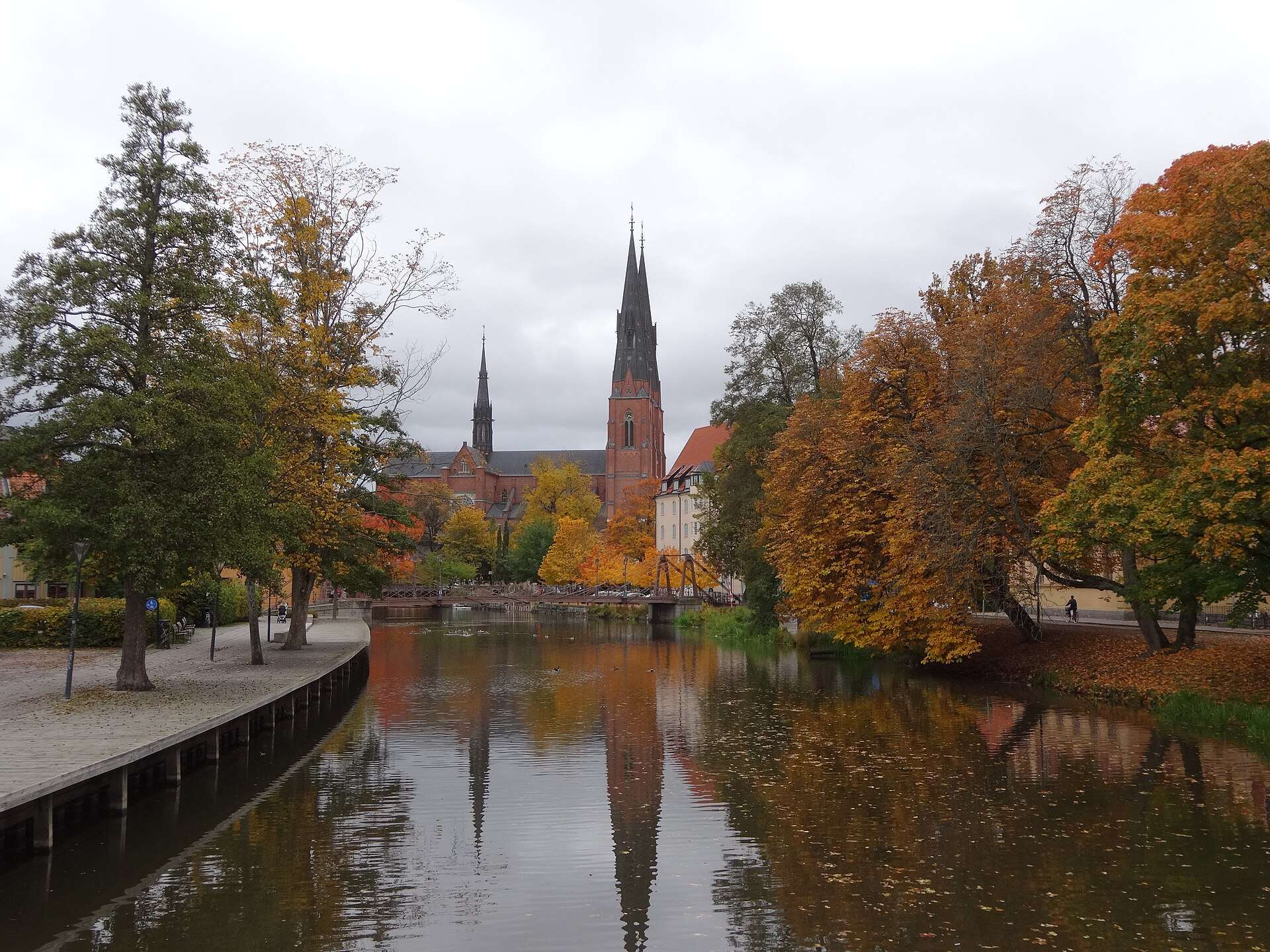
- The cathedral is Scandinavia’s tallest church at just under 119 meters — Gothic, coronation-scarred, and holding the tombs the alarm named: Gustav Vasa, founder of modern Sweden, in his chapel, and Carl Linnaeus, who named the living world, under the floor.
- Gamla Uppsala — bus 2, about fifteen minutes — raises its three great royal mounds from the plain: 6th-century burials by the standard dating, seat of the pre-Christian kings and the old temple the chronicles describe, with the mounds free underfoot per the alarm and the Gamla Uppsala Museum decoding the digs for a modest ticket.
- The Linnaeus Garden restores the botanist’s own teaching plots with his house-museum alongside; his summer estate at Hammarby serves the completists further out.
- The university (1477, the Nordic region’s oldest) supplies the town’s texture — the Gustavianum museum’s 17th-century anatomical theatre under its dome, the Carolina library’s silver bible, and the student nations’ houses running the social calendar.
- Fika per the alarm is the civic religion: the classic konditori rooms around the cathedral pour it properly, and the cinnamon-versus-cardamom bun question is settled empirically, one of each.

Getting there
The rail corridor runs at shrug frequency — commuter services on one fare system, mainline trains on another, both about forty minutes, and the platform choice matters less than just boarding. Uppsala’s station lands ten flat minutes from the cathedral; bus 2 to Gamla Uppsala leaves from the center at city-bus rhythm. The whole day runs on turn-up logistics, per the alarm’s no-planning promise — the single check worth making is Walpurgis Eve (April 30), when the entire student city detonates into champagne breakfasts and river rafts, gloriously and not quietly.
The day
Cathedral first: the nave’s Gothic height, Vasa’s chapel with its painted history, and Linnaeus’ floor slab — the two Swedens, state and science, buried fifty meters apart. The treasury tower’s textiles and regalia extend the ticket for the committed. Then the alarm’s bus 2 to Gamla Uppsala: the three mounds against the sky, walked and climbed freely, with the museum’s hour setting the boat-graves, the temple accounts, and the archaeology’s careful maybes under the legends. The old church beside the mounds — the archbishops’ seat before the town moved — closes the site. Back in town, the Linnaeus Garden’s ordered beds and the Gustavianum’s anatomical theatre fill the afternoon, and the riverside walk threads the university’s blocks. Fika lands wherever the konditori looks most serious — the alarm already cleared the calendar for it. Evening trains run constantly; nobody checks a watch in Uppsala.
When to go
May through September gives the mounds their green and the river its café barges; the garden peaks midsummer. Walpurgis (April 30) is the year’s singularity — the student capping ceremony, the rafts, the town at full carnival — join it deliberately or date around it. Winter runs short-lit and calm, with the cathedral’s interior and the fika rooms carrying the day between trains. The mounds under snow, for the few who go, look exactly as old as they are.
Frequently Asked Questions
Who is actually buried in the mounds?
The honest answer: high-status 6th-century cremations — the museum presents the evidence and the Ynglinga-dynasty traditions side by side without forcing the marriage. ‘Kings of legend, burials of fact’ is the working summary, and standing on them costs nothing either way, per the alarm.
Is the cathedral’s height claim solid?
At 118.7 meters to the spires it holds the Scandinavian title comfortably — a Gothic original much rebuilt after fires, with the 19th-century restoration supplying today’s silhouette. The interior’s chapels and tombs outrank the statistic.
What did Linnaeus actually do?
Built the naming system — genus and species — that biology still runs on, from this town, this garden, and these lecture halls. The garden museum tells it at human scale; his slab in the cathedral says ‘Prince of Botanists’ with Sweden’s full agreement.
Uppsala or Sigtuna from Stockholm?
Sigtuna (documented on this network) for the lake-town charm and rune stones at smaller scale; Uppsala for the full cathedral-university-mounds day. History weight favors Uppsala; postcard quiet favors Sigtuna — the trains make either effortless.
What exactly is proper fika?
Coffee plus something baked, taken seated and unhurried, as a social institution rather than a caffeine delivery — the pause is the point. In Uppsala the konditori rooms near the cathedral run it at full ceremony; ordering a second round is participation, not indulgence.