The Boat to Drottningholm
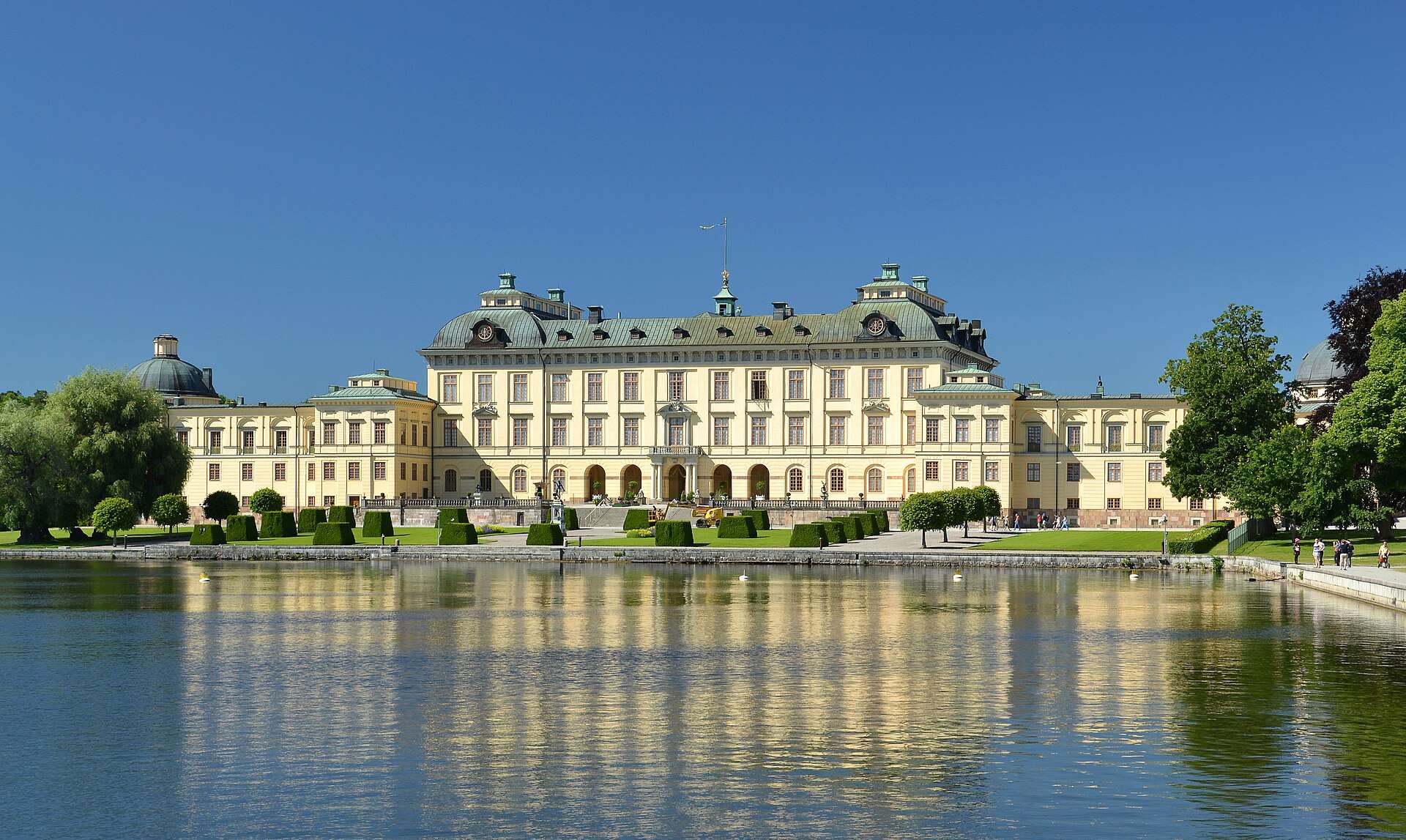
The royal family’s home stands on a lake island west of the city — a UNESCO palace with free baroque gardens and a 1766 theatre whose wooden stage machinery still works. The boat out is half the visit.
The short version
- Summer boats run from Stadshuskajen (by the City Hall) across Lake Mälaren to the palace jetty in about 50 scenic minutes; the year-round route runs T-bana to Brommaplan plus a short bus, about 35 minutes on ordinary transit — city transit at sl.se.
- Drottningholm is Sweden’s best-preserved royal palace and the family’s actual residence since 1981 — UNESCO-listed as an ensemble, with the south-wing private quarters and occasional state closures as the living-palace tax the alarm named.
- The baroque gardens and the wilder English park spread free and always open — avenues, bronzes, and lakefront enough to justify the trip with no ticket at all; palace tickets and hours at kungligaslotten.se.
- The palace interior’s state rooms — the staircase, the library, the audience chambers of three centuries of queens — run around SEK 150–160 with guided tours in English on posted times.
- The Court Theatre (1766) survives with its original wooden stage machinery — wave rollers, cloud cars, thunder box — still functioning; entry is by guided tour only, and summer’s period-instrument opera performances use the works in earnest.
- The Chinese Pavilion at the park’s far end — a rococo fantasy birthday gift from king to queen, 1753 — opens seasonally and completes the ensemble’s UNESCO citation.

Getting there
The alarm’s asymmetric route is the connoisseur’s version: the Strömma-operated boats leave Stadshuskajen through the summer season, threading Mälaren’s islands with the city falling away behind — buy the single, not the return, and let SL’s Brommaplan connection carry you home when the afternoon ends. Off-season, the metro-bus route runs both ways in efficient anonymity. The palace jetty and bus stop both land you at the gates; the day needs no bookings beyond a glance at the theatre tour’s times, which anchor the schedule per the alarm.
The visit
Gardens first while the light angles: the baroque parterre’s geometry, the avenue perspectives, and the lakefront path that frames the palace the way the architects intended. The state-room tour fills the late morning — Hedvig Eleonora’s staircase theater, the library’s enlightenment gleam, and the guides’ running account of a working palace (the family’s comings noted with Swedish discretion). The theatre tour is the day’s singular hour: the auditorium’s painted illusions, the machinery demonstrated — waves rolling, clouds descending on their original ropes — and the stage where Gustav III’s era performs again each summer. The Chinese Pavilion walk closes the ensemble in season, and the café by the gates handles the fika the schedule owed you. The bus-metro return runs at whim.
When to go
May through September is the full program: boats sailing, pavilion open, gardens in color, and the theatre’s opera festival dressing the machinery in actual performance — tickets for those evenings sell separately and early. Winter trims to the palace core and the gardens’ bare geometry, reached by the landward route, quiet to the point of privacy. Royal calendar closures scatter the year without pattern, per the alarm — the palace site’s notice page is the one pre-trip check worth making.
Frequently Asked Questions
Is it worth going if the palace is partly closed?
Yes — the gardens are free and complete, the theatre tour runs independently, and even reduced state-room circuits carry the ensemble’s weight. The living-palace closures are the price of visiting a residence rather than a museum, and the trade favors the visitor.
What’s actually special about the theatre?
Survival — court theatres burned or were modernized everywhere else; Drottningholm’s was simply locked and forgotten after 1792, preserving machinery, sets, and auditorium intact. Rediscovered in the 1920s, it now performs 18th-century opera with 18th-century stagecraft. Nowhere else on earth does this at this completeness.
Boat or land route if I choose one?
Boat in season, without hesitation — Mälaren’s approach is the palace presenting itself as designed. The land route is the efficient understudy and the winter default. The alarm’s one-of-each is the optimized answer.
Will I see the royal family?
Their quarters are private, their movements unannounced, and the guides deflect with practiced charm — though flags and closures whisper. Treat it like visiting someone’s magnificent front rooms while they’re home, because that’s precisely what it is.
Drottningholm or Vaxholm for the Stockholm boat day?
Vaxholm (documented on this network) for archipelago town-and-fortress charm; Drottningholm for royal ensemble and the theatre’s singular machine. Different waters — Mälaren west, Baltic east — and both justify their boats. Culture chooses the palace; sea air chooses the archipelago.