Sigtuna, Sweden’s First Town
An hour out, Sweden’s first town keeps its main street on the line laid around 970 — with more runestones standing along it than any town in the country, church ruins on the rises, and a town hall proud to be tiny.
The short version
- The route runs Stockholm C to Märsta by commuter train plus a short bus into Sigtuna — about an hour on the ordinary transit card (sl.se) — landing steps from Stora Gatan’s western end.
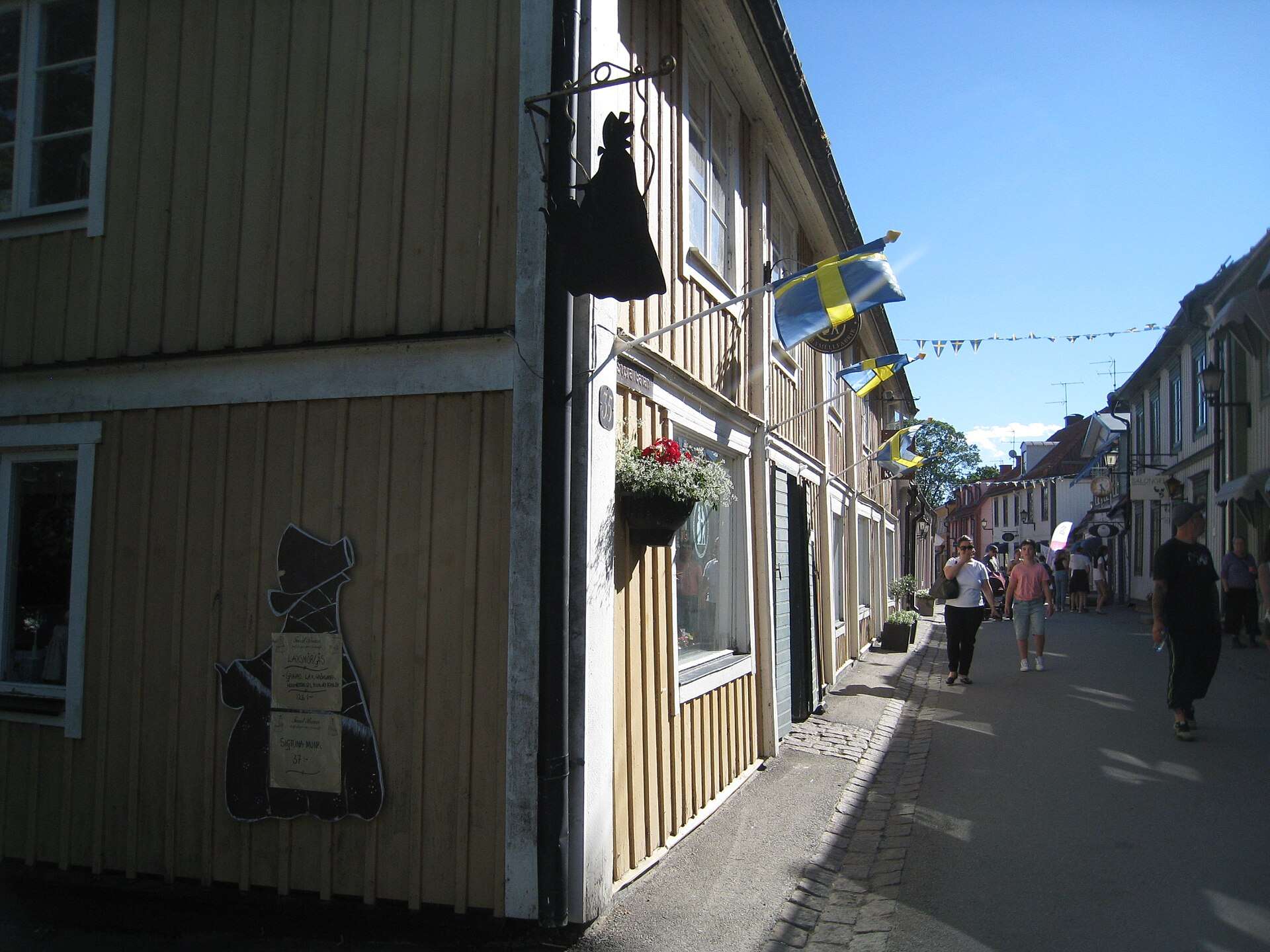
- The first-town credential is the founding fact: Sigtuna was laid out around 970 as Sweden’s earliest true town — royal, Christian, and minting the country’s first coins — predating Stockholm by centuries, with Stora Gatan still following the original street line a millennium on.
- The runestones per the alarm are the open-air museum: more standing runestones than any other Swedish town, raised along the street and lanes by 11th-century families — the signed rune trail walks them with translations, memorials to travelers, kin, and bridge-builders carved a thousand years ago (town information at destinationsigtuna.se).
- The church ruins carry the medieval skyline: St. Per and St. Olof — massive early-stone churches now standing as open shells on their rises — with St. Mary’s, the brick friary church, surviving in full use beside them.
- The rådhus is the small joke the town keeps straight: the 18th-century town hall counts among Sweden’s smallest — one council room and a dome barely taller than the lindens — open in season and photographed per the alarm regardless.
- The lakefront rounds the register: Mälaren’s water, jetty benches, and the fika institutions (Tant Bruns’s low-beamed coffee house the famous one) that per the alarm set the day’s actual schedule.

Getting there
The transit-card simplicity is the trip’s character — no bookings, no gates, the commuter system delivering a millennium back in an hour. The town’s plan does the rest: one long original street, the ruins on their small rises behind it, the lake in front. The rune trail’s markers begin near the museum and thread the center; the whole circuit walks in a gentle afternoon, which is why the alarm frames it as a half-day that expands under willing feet.
The day
Stora Gatan first, walked slowly end to end: low wooden town houses, the runestones appearing at corners and gardens per the trail’s markers — each translated plaque a one-sentence saga (in memory of a son who died east, a mother who built the bridge) — with the Sigtuna Museum’s Viking-age finds anchoring the history mid-street. The ruins take the middle hour: St. Olof’s squat towered shell, St. Per’s arches open to the sky, and St. Mary’s working interior for the contrast. The rådhus gets its photograph and its two-minute interior in season. Then the alarm’s fika clause takes over: cinnamon-scented coffee hours at Tant Bruns or the lakeside, the jetty benches, and the water doing the scenery as promised. The bus-and-train chain home runs on the card’s schedule, not yours.
When to go
May through September runs the full version — museum and rådhus open, lake swimmable at the town beach for the committed, terraces out. December is the counter-season: Sigtuna’s Advent lights and market lean into the wooden town’s candlelit best. Winter otherwise strips it to runestones in snow, which photographs like the eleventh century and costs nothing. Midsummer weekends bring Stockholm’s own day-trippers; weekdays return the street to its residents and you.
Frequently Asked Questions
Why does such a small town have so many runestones?
Because 11th-century Sigtuna was rich, royal, and Christian-transitional — the families who traded east and built churches raised memorial stones in the fashion of the age, and the town never grew enough to bury them under later centuries. The result per the alarm: more standing stones in situ than anywhere else, readable where they were raised.
What happened to the big churches?
Reformation and time: the great early-stone churches of a town with outsized ambition lost their roles as Sigtuna’s importance passed to Uppsala and Stockholm, and St. Per and St. Olof decayed into the stabilized shells standing today. The ruins are the visit’s atmosphere — a first city’s scale outliving its moment.
Is the museum worth it?
The Sigtuna Museum is small and genuinely good: the coinage of Sweden’s first mint, Viking-age trade finds, and the town-founding story told at the right length. It slots into the street walk without bending the day, and its context upgrades every runestone after it.
What is fika exactly?
Sweden’s institutionalized coffee-and-something pause — less a snack than a scheduled act of civilization, per the alarm’s fika-sets-the-schedule clause. Sigtuna’s low-beamed coffee houses are among the country’s most atmospheric practitioners; ordering a kanelbulle and refusing to hurry is full compliance.
Sigtuna or Uppsala from Stockholm?
Uppsala (documented on this network) for the cathedral, the university, and the royal mounds at bigger-city scale; Sigtuna for the older, smaller, quieter original. First town versus fourth capital — Uppsala fills a day, Sigtuna perfects a half — and the same northbound corridor serves both for travelers stacking them.